Dental clinics
How to get new dental patients: the 6-part system from Google profile to booked consult
Parts 1 to 3 need no ad budget. The ads, the part that costs money every day, start once the rest holds
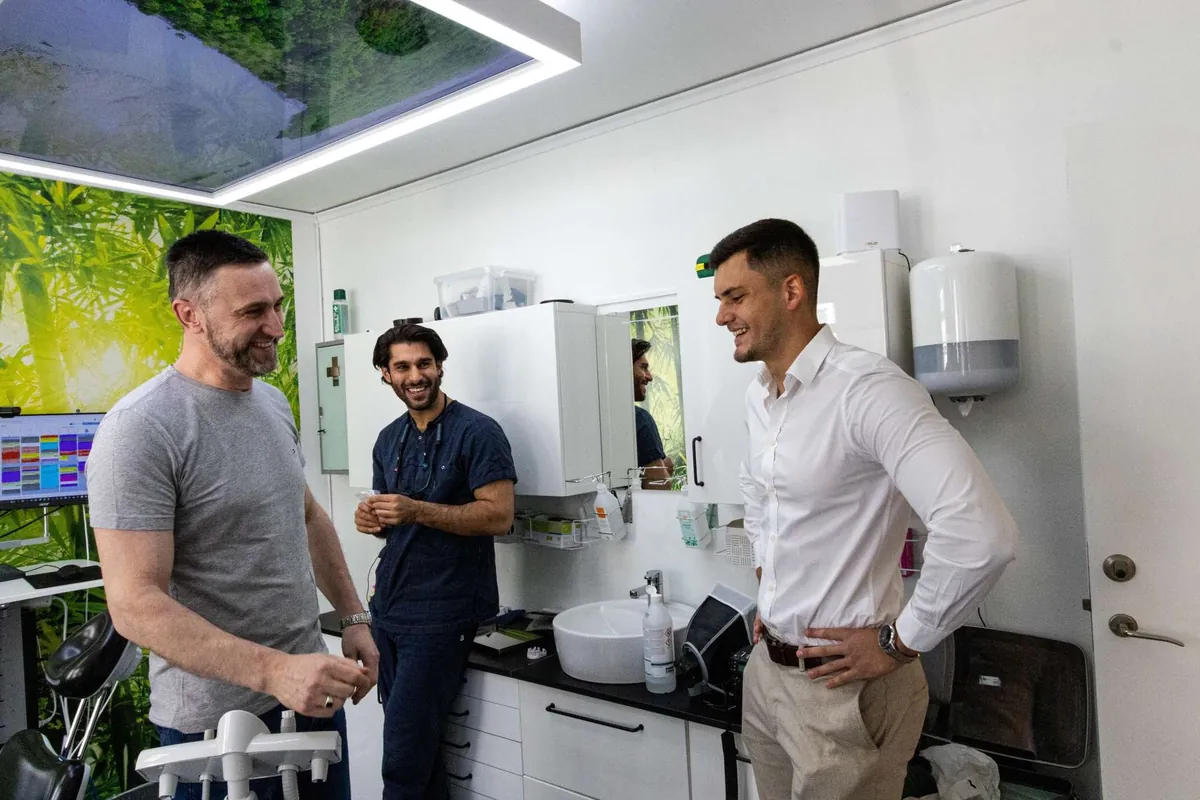
To get new dental patients, build a lead generation system with 6 parts, in this order: your Google Business Profile, your reviews, the patients already in your records, a text to every new inquiry in under 5 minutes, ads filmed at your clinic, and booked consultations counted per ad.
Most clinics start at part 5, the one that costs money every day. The American Dental Association says some practices lose as many as 30-50% of the initial contacts from prospective patients, through calls nobody handled well. Paid clicks fall through the same gap.
Parts 1 to 3 need no ad budget, so you can start on them this week. We're Leadflix, and this is the order we run as a dental marketing agency for the clinics we work with.
1. Google Business Profile: patients see it before your website
Search for a dentist in your town and Google shows the map, the names, the star ratings and the opening hours above any website. Google's own help page says local results "are mainly based on relevance, distance, and popularity" (Google Business Profile Help, read October 2026).
The same page says "businesses with complete and accurate info are more likely to show up in local search results." Distance is fixed. The rest you can change this week:
- The right primary category, phone number and opening hours, holidays included.
- Every treatment you offer, listed as a service.
- Real photos of your rooms and your team.
- A booking link that opens your calendar.
2. Reviews: Google bans asking only the happy patients
Your rating and review count sit next to your clinic's name, and Google says "more reviews and positive ratings can help your business's local ranking." Its content policy for Maps also forbids you to "selectively solicit positive reviews from customers" (read October 2026).
So ask every patient after the visit, with a direct link to your profile, and ask for a referral in the same message. Google's policy also bans incentives "such as payment, discounts, free goods and/or services" in exchange for a review.
Tor Dental had fewer than 20 Google reviews when we started working together. In October 2026 it had 516 across its 3 clinics in Märsta, Uppsala and Sundbyberg, rated 4.8 and 4.9 (Google Maps). We built them up with the clinic, and every one comes from a real patient. Reviews like those belong in the ads.
3. The patients you already have: bookings with no ad budget
The patients in your records can book again without an ad: the ones you haven't seen in a long time, and the ones who left with a treatment plan and never booked it.
For the clinics we work with, the Reactivation Agent picks a batch of past patients every day and writes each one a message that fits their history. A person on our team approves everything before it goes out.
If you do it yourself, start with a short list so the front desk can keep up with the replies. Send a short, personal message from someone at the clinic and offer a specific time.
4. A text in under 5 minutes, then a person who qualifies
On our dental accounts, every new patient inquiry gets a text in under 5 minutes, 7 days a week, while the phone is still in the patient's hand. Then a person follows up. Nobody should hear from their dentist through a robot voice.
Harvard Business Review found in 2011 that "most companies are not responding nearly fast enough" to inquiries from the web (The short life of online sales leads). For calls, the ADA suggests a "missed call" text to anyone you missed, and its guide Phone Calls from Prospective Patients says to aim to "answer every phone call by the third ring".
What the first text says
- Who is writing, and from which clinic.
- An answer to the question the patient asked.
- 2 specific times, so the patient can reply with one word.
An illustrative example:
Hi Anna, thanks for reaching out. It's a no-strings 30-minute consultation where the dentist goes through your options. We have openings Tuesday 09:00 or Thursday 14:00. Which works best for you?
4 questions that sort a consultation from a price check
Before anyone lands in your calendar, the person following up asks:
- Which treatment are you asking about, and what's bothering you today?
- Have you had an exam or a treatment plan somewhere else?
- When would you like to get started?
- Which times suit you: mornings, afternoons or after work?
On our accounts only the ready ones reach your calendar; the rest get an answer and a follow-up later. The ADA's intake list for new callers starts in the same place, with the reason for the call and availability.
5. Ads filmed at your clinic start once parts 1 to 4 hold
Ads are the part of dental marketing that costs money every day, and every click lands on your profile, your reviews and your reply speed.
Our photographer comes to the clinic about 1 day a quarter and directs the shoot. The films show your dentists, your rooms and patients who chose to tell their story. Give every ad its own idea: the ad platforms treat near-identical ads as one. Send each ad to a page about that one treatment, with the film, what the consultation includes and a way to book it.
In Google Search ads, the page's landing page experience is one factor in each keyword's Quality Score, judged on "the usefulness and relevance of information", "ease of navigation" and "the expectations users have based on the ad they clicked" (Google Ads Help). In the US, section 5.F of the ADA's ethics code bars dental advertising that is "false or misleading in any material respect" (ADA).
Point the campaigns at booked consultations for the treatments that carry the clinic. Advertise cheap check-ups and you take budget from them. Valdemarsviks Tandläkare, a clinic we've worked with, tripled revenue in 3 months, from the first campaign to the third.
43
6. Count booked consultations per ad, all the way to a yes
Follow every ad to a booked time, a kept appointment and a yes to the treatment plan. Count only inquiries and you can move money to the wrong ad.
Your cost per booked consultation is your ad spend divided by the consultations booked in the same period. Illustrative numbers, not a client result: campaign A brings 100 inquiries and 10 booked consultations, campaign B brings 40 inquiries and 22. At the same spend, B costs less than half as much per booked consultation. Count check-up and implant bookings apart, or a campaign full of check-ups can beat one that books implants. The full method, with a calculator, is in why cost per lead is the wrong number to optimize for.
Tor Dental's result is counted the same way: 50 implant consultations a month.
The whole system comes down to 6 numbers, one per part:
| Part | The number to watch |
|---|---|
| 1. Google Business Profile | Calls, booking clicks and direction requests from the profile |
| 2. Reviews | Your rating and review count, next to the clinics around you |
| 3. Patients you already have | Past patients messaged, and how many book again |
| 4. First reply | Minutes from inquiry to first text, every day of the week |
| 5. Ads filmed at your clinic | Booked consultations per ad |
| 6. Booked consultations | Kept appointments and accepted treatment plans, per treatment |
The ads, the reply and the booking are the steps Attract, Qualify and Book in Camera to Calendar, the system we run for clinics. The consultation lands in the calendar with the notes, the front desk gets call scripts for the follow-up, and every Wednesday we drill the objections with the week's real calls.
If you're choosing someone to run it with you, put every agency through the 7 tests for a marketing agency for clinics, us included. If you'd rather buy the booked consultations themselves, here is what a booked appointment service should include.
Straight answers to common questions
What is the best lead generation system for a dental clinic?
One that runs from the first search to an accepted treatment plan, with a number at every step: a complete Google profile, steady reviews, reactivation of past patients, a reply in under 5 minutes, ads filmed at the clinic, and booked consultations counted per ad. It's the chain Leadflix runs for dental clinics, and Tor Dental reached 50 implant consultations a month on it.
How do you get new dental patients without paying for ads?
Start with the 3 parts that cost no ad budget. Complete your Google Business Profile, ask every patient for a review with a direct link, and message past patients who haven't booked in a while or left with a treatment plan they never started.
How fast should a dental clinic reply to a new patient inquiry?
Within minutes, 7 days a week. On our dental accounts the first touch is a text in under 5 minutes, then a person follows up. Track the gap between inquiry and first reply next to the number of inquiries.
Should we attract new patients with a free exam or a discount?
We'd rather you didn't. A discount fills the book with people who wanted the discount. If you test one anyway, count what it brings in booked consultations for the treatments you want.
How much does it cost to get a new dental patient?
It depends on the treatment, your area and how many inquiries become kept appointments. Divide your ad spend by the new patients from the same period and you have your own number. Work it out per treatment, because an implant case and a check-up are worth different amounts.
How should a dental clinic reply to a negative Google review?
Stick to the facts, keep it calm and say nothing about the patient's treatment. In the US, a California practice paid $23,000 in 2022 to settle a federal HIPAA investigation after its replies to online reviews included patient names, insurance and treatment details (TechTarget). Write the reply for the next patient who reads it.

Author
Oscar Cruz
Founder, Leadflix
Leadflix started when our founder, Oscar Cruz, saw that most gyms and trainers were terrible at marketing and started fixing it. Clinics and home improvement came next, where 1 new customer is worth enough that the math changes: fill the calendar and the business grows. 80+ businesses, $7M in client revenue and 40,000+ sales appointments later, that is still the whole job.
Articles by Oscar